Shadow Work in the Year of Kindness

Shadow work in the year of kindness
or: internalisation of the belief there is no such thing as a disposable creature
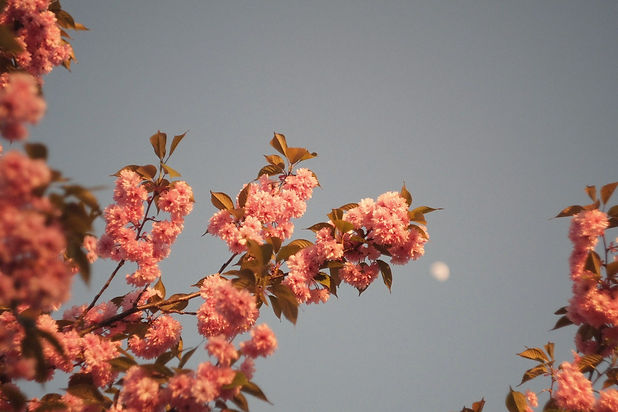
*Photos taken over the months I took the notes that eventually became this essay, which is going to be part of my final statement for RJF Training, which includes a personal statement about an experience related to my certification
.
Last year was hard for me. Eventually, I'll stop saying that, hopefully right after this: It was the year from hell. This year was a blossoming after destruction. It was beautiful.
I wrote an essay about it, in part becase the worst harm was 'public' ( in that tens of thousands of people visited my sites and profiles, though I doubt any of them spared a thought to what actually happened to me), and in part becase I needed to talk about how we hurt ourselves and everyone when we accept the atrocious premise of the constraints of violence, how we work the same painful systems over and over instead of practising actions that can build a better world.
So, some violence and resulting months of wildly symptomatic CPTSD and all the resulting fallout later, and I have survived what has been by turns (and often at once), the most interesting, intense, sad, painful and beautiful time of my life. Rebuilding my sense of self and safety this last year has been a gift; life has bloomed in my hands.
For the past few years, I had been saving some money to go to school and start a business as a Death Doula. I had been planning on rooting my practice in the principles of Radical Love, and I surfaced out of the darkness of trauma even more committed than ever.
Anti-apartheid activist Bishop Tutu said, “If you are neutral in situations of injustice, then you have chosen the side of the oppressor.” Something I hear a lot from people is that “Radical Compassion,” “Revolutionary Love,” and “transformative justice” are paths of neutrality, and thus support oppression. In both the Restorative Justice [RJ] and Death Doula educational spaces, really in almost everyone I talk to about it, there is real fear that centring love and care for everyone means we won't take sides, and in refusing to take sides, we are supporting violence and the status quo.
I don't always have an answer to that fear, but I have a life-altering and intimate understanding of this truth: cruelty is the status quo.
And now, I realised, sitting in my first full weekend seminar on RJ Facilitation, listening to our educator talk about reflective and supportive exercises we can offer people to help process the harm they have caused, and to help meet the complexities victims face having their experiences used to rehabilitate others, that after everything I experienced in 2024, I worry a lot less the foundational ideas of Radical Love and Kindness will lead me to make shallow compromises, or lose sight of important truths.
My life, body and mental health have been pressed up against the reality of violence and harm from all sides of the ideological spectrum, and as a result, I believe today, even more deeply, that Radical Love is a call to, and the method by which we transcend, cruelty. It is the call and the method to overcome cruelty and harm.
This is not an easy idea to live with. If you think it's easy, you misunderstand.
And, this is very important-
Are you listening?
It isn't the same as someone telling you not to be angry.
As a disorder, my CPTSD is rooted in events across my life of sudden, random violence, of harm and intentional or thoughtless dehumanisation from unexpected sources, of stolen choices and shattered safety at repeated but random intervals. Violent assaults, sudden illness, blood and near-death experiences, chronic pain, death and rape threats for weeks ... and then months. I am angry. Rage is reasonable. There are moments almost every day when I am so angry it is difficult to breathe. A centre of my post-crisis therapy and self-care has been to learn to live with these moments, to accommodate them with my body while living a life of massive happiness and love. A lot of the work of moving forward has been to let multiple truths live in me at once. Rage and joy share my body. In therapy, I sometimes talk about rage like it is the bedrock of my life, a stone you would find deep in the earth, ancient, older than me. It's a rage, I think, that belongs to many of us.
.
Does loving people who cause harm betray their victims? Is saying call-outs are harmful a false equivalency? Is acknowledging that perpetrators are also victims who have their own needs justifying the harm they cause? Is it possible to care for the harmful without abandoning the harmed? Is the voice of a victim decentered if they are found to have also caused harm? Is a victim's healing deprioritised by their community when they are accused of harm?
To me, Revolutionary Love is not an idea that exists in a world where no one gets hurt, or where no one wants to punish others, or a world free of consequences. Radical and Revolutionary Love exists in this world, where they are hugely challenging. Nevertheless, I genuinely think it is one of the only reasonable, achievable ideas that can free us from cycles of violence and aid us in ending the oppression we are trapped within under capitalism and white supremacy. Radical Revolutionary Love is essential to the world I want to live in, a world where we are free, and harm is rare and healed holistically.
Core to the understanding and practice of this love is the ability to be with human beings in all their beautiful and terrible complexity. I first considered my stance on this when reading about the role of a death doula in helping people who have committed moral crimes die peacefully. I had to consider it again when deciding how to respond to my spouse when faced with horrible allegations against them that challenged my understanding of reality and myself, while also experiencing overwhelming psychological violence from their call-out and their peers.
There are moments when we are confronted with the multiple truths that live within every person ... There are moments all we can do is hope that when we look back, we can say we did our best with what we had in the moment.
And I did my best. And I learned a lot.
Community healing is a powerful alternative to individualistic models that isolate, punish, victimise and perpetuate cycles of violence. We can act instead to promote healing and validation, and a sense of belonging through shared storytelling, collective grieving, and creating groups and space and time for public accountability. Both my educational spaces right now centre the inherent dignity of every person to ensure that those who want to heal, victim or perpetrator, can do so.
The unfortunate logic is this: using social violence against community members to isolate them as punishment only works on those who can be hurt by knowing they hurt others. We can only use social crualty as a weapon successfully if our target has empathy and a sense of right and wrong. People who are undaunted by this return more angry and more dangerous to others in the same or a slightly different community. The only people we can ostracise successfully are the ones we can heal, the ones we should hold on to.
The point of a community is that when a hurt person hurts people, every single person involved has a space to go and a group of connected, concerned individuals who hold space and offer them trust and time to grow into integration and return to safety, and to grow into accountability and return to goodness. Radical Love believes the point of community is to offer healing to all its parts, to facilitate its own healing, not to perpetuate punishment and exile. Restorative Justice and Radical Love are how a community heals itself.
.
I'm not here to tell you how to be good.
Goodness is contextual to your choices, your past and present and what is accessible to you. But we do not rise to heroics when it counts, we fall to our training. Love is a practice - Radical Love is saying whatever you do, whatever goodness looks like contextually, needs to be informed by kindness and compassion. Radical Love is understanding that we literally physically make these things in the world when we intentionally choose to centre respect and hope, and whatever honesty we are capable of. And it cant be an action that perpetuates as harm or destructions as it addresses.
The choice to use love even though we know we are deeply entitled to anger, to disappointment, maybe even revenge, is a difficult and active one. Love and care are verbs and if the thing we want is a world where there is significantly less harm, we must choose not to make harm even when we feel or know we would be justified in doing so. If we want love and care, we must make it, over and over, the way we make bread.
*Photos taken over the months I took the notes that eventually became this essay, which is going to be part of my final statement for RJF Training, which includes a personal statement about an experience related to my certification